Across India, millions live this reality.
Responses are often fragmented—health programs disconnected from livelihoods, climate action arriving after the disaster. These gaps leave families to navigate overlapping crises alone. That’s why we must build agency—at the household, community, and ecosystem level—so people can drive their own resilience.
people could be pushed into poverty by climate change alone by 2030.
Indians fall into poverty every year because of medical bills.
can't repay informal loans, trapped in debt at crushing interest rates.
Building resilience is not a one-time outcome. It is a long-term capacity - the ability of households to exercise agency to endure, recover from, and adapt to shocks on their own terms, without compromising their well-being. This lens reshapes development through three fundamental shifts
Helping families stay healthy and earn steadily.
Capital that grows, not grants that deplete.
Communities as changemakers, not recipients.
Their ability to withstand a crisis depends on the systems around them—health services that hold
steady during disasters, livelihoods that don't collapse overnight, social protection that reaches
them when needed, and climate action that helps them prepare before the storm hits.
That's why we work across multiple levels strengthening systems while building household and
community agency.
We use the Know Your Resilience approach (KYR) to help households assess their agency across six domains—health, education, income, infrastructure, social capital, and mental well-being. This moves families from reactive coping to self-driven planning.
Households don't get handed a pre-packaged solution. A network of Resilience Fellows (CSOs) and Resilience Saathis (community facilitators) walk alongside families, helping them co-create a Resilience Solution Plan—identifying gaps, setting goals, and building "solvability."
The Resilience Fund works differently. It provides small, affordable loans to families. When repaid, the money flows back to help the next household. Interest covers community trainers. The fund keeps growing.
One rupee, multiple impacts. Perpetual. Regenerative.
a) A Digital Solutions Board connects households to practical solutions across livelihoods, savings, social protection, climate adaptation, and community support. It helps families move from awareness to action by answering one question: What solutions exist around me, and how can I take charge of them? In doing so, it becomes a bridge between knowledge and agency—for households, CSOs, enterprises, and governments.
b) A Shared Digital Platform turns household-level information into actionable insights that families can own and act upon. Built using Whatsapp, GIS, Python, and AWS, it enables real-time, hyper-local planning and evidence-led decision-making—helping households make informed choices, Panchayats and CSOs plan locally, and state and national governments design better policies. Together, the Resilience Index™ and Solution Board form the backbone of a Digital Public Good (DPG) that puts agency for resilience in the hands of communities.
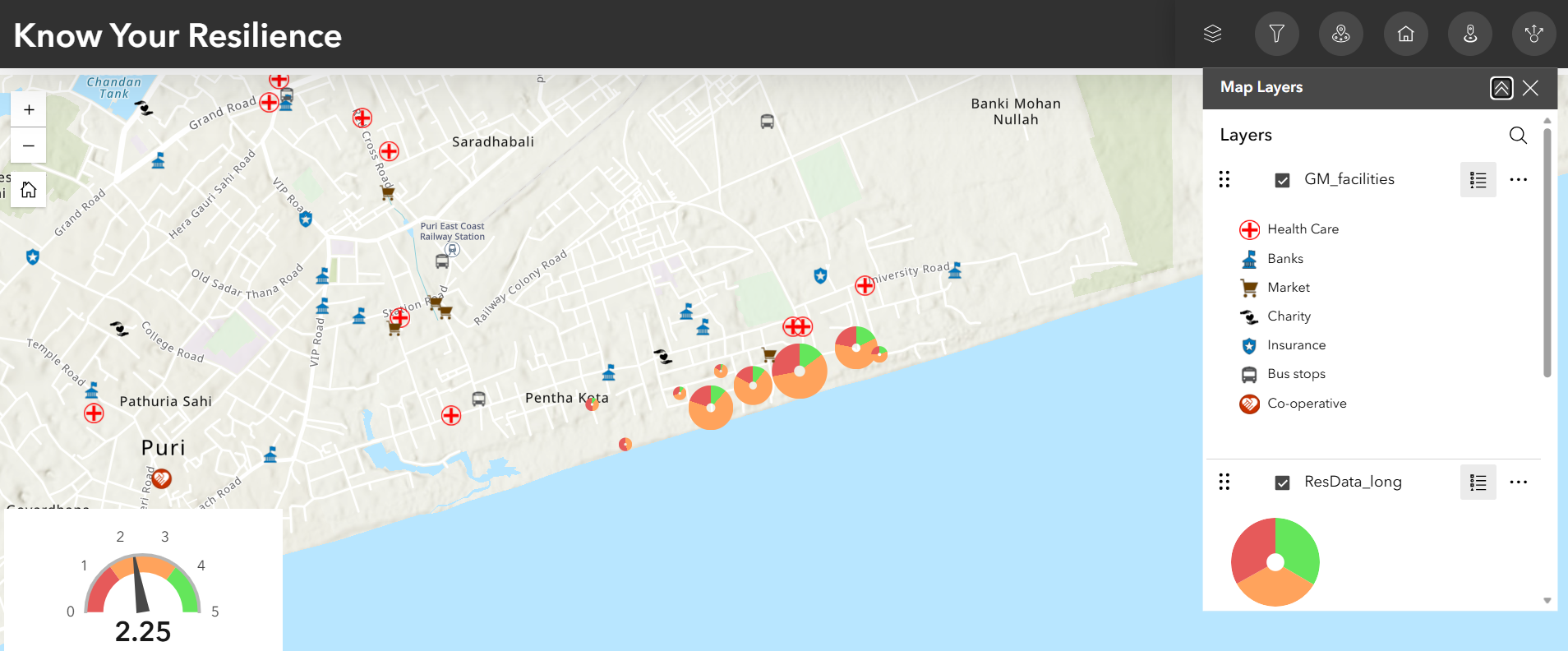
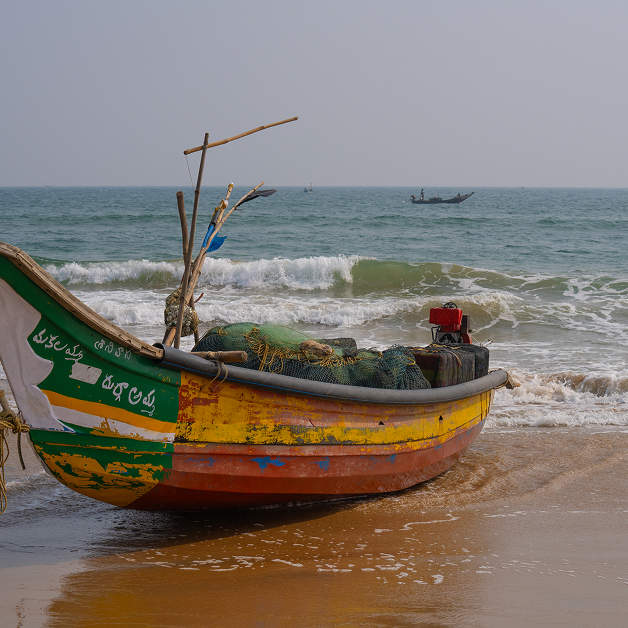
In 2023, we piloted the Resilience Movement in coastal Odisha.
The question we wanted to answer: Can a lightweight, community-led model actually build resilience
in places where cyclones hit year after year?
We partnered with Gopabandhu Seva Parishad (GSP), a trusted local organisation. Together, we worked with 1,500 households in Pentakota over one year.
Here is what the evidence showed.
62% of households increased their monthly income.
75% of households increased their annual savings.
Average household debt dropped by ₹16,000.
Median increase: ₹5,000 per month.
Median increase: ₹10,600 per year.
Families shifted from moneylenders to banks and Self-Help Groups. Borrowing became safer. Purposeful.
285 new women joined Self-Help Groups. Pooled savings reached ₹1.19 lakh with interest-free lending within the community.
2,500+ individuals linked to government schemes. 1,555 people reached with health screenings.
Resilience is not a theory. It's a woman who saves through cyclones. A family that borrows safely. A community that pools resources and protects its own.
The Resilience Movement is already taking root across India. In a short span, we've moved from concept to action with partners on the ground proving that this model works.
organisations identified as “Fellows” across 9 states (26 locations and 7 communities), anchoring resilience in local communities
Resilience Saathis learning to facilitate resilience journeys
households initiating their resilience journeys
No single organisation can build resilience at scale. It takes a network.
Community Action Collab brings together 400+ diverse members, including CSOs, local governments, and the private sector - to align around shared outcomes.
Beyond our direct platform, we co-create and participate in coalitions across sectors. In some, we play a convening role. In others, we are one voice among many. The goal is always the same: connect efforts so they multiply, not duplicate.
On the ground level, Resilience Fellows such as Gopabandhu Seva Parishad anchor this effort. They engage and train Resilience Saathis — local women and men who walk alongside families, supporting the journey, one decision at a time.
This is not a programme delivered to communities. It is a system strengthened with them and increasingly, by them.
Here's how you can plug in:
A program for CSOs to become anchors of change. We help you build a "resilience lens" onto the work you're already doing.
Simple tools that help households see their own strengths and decide their own path forward.
Map your services against the real-time needs identified by communities. Targeted help, zero waste.
An upcoming platform to make resilience training accessible to every practitioner in the country.