

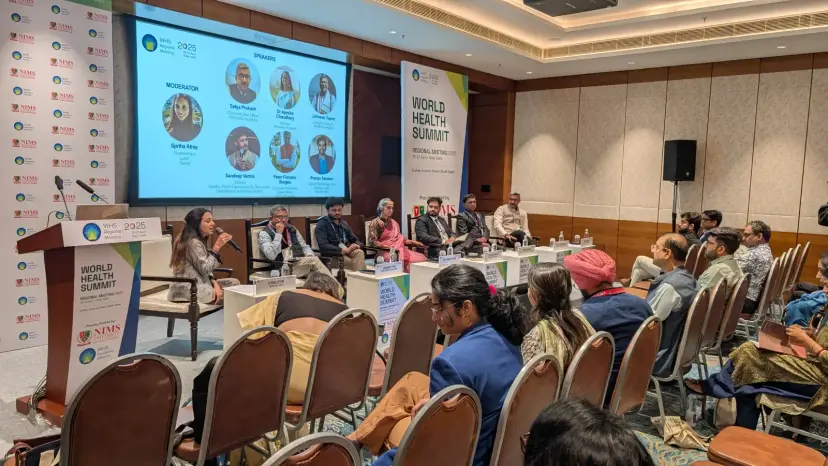
Held on Day 3 of the World Health Summit – Regional Meeting 2025 in New Delhi from 25-26 April, this panel was part of the Summit’s broader focus on strengthening health systems for a sustainable and equitable future. As climate change emerges as one of the greatest health threats of our time, the session brought critical attention to the lived experiences of vulnerable communities in India.
Overview
This session brought together grassroots leaders and public health advocates working across diverse vulnerable communities to discuss the lived realities of climate-induced health risks. The conversation was grounded in real-world experiences from tribal regions, informal urban workforces, adolescent health spaces, and digital health ecosystems. The panelists shared both challenges and actionable insights for inclusive adaptation strategies, with a strong emphasis on centering community leadership, especially women and youth, in the climate-health discourse.
Key Themes & Takeaways
1. Climate Change Is a Lived Reality for the Marginalised
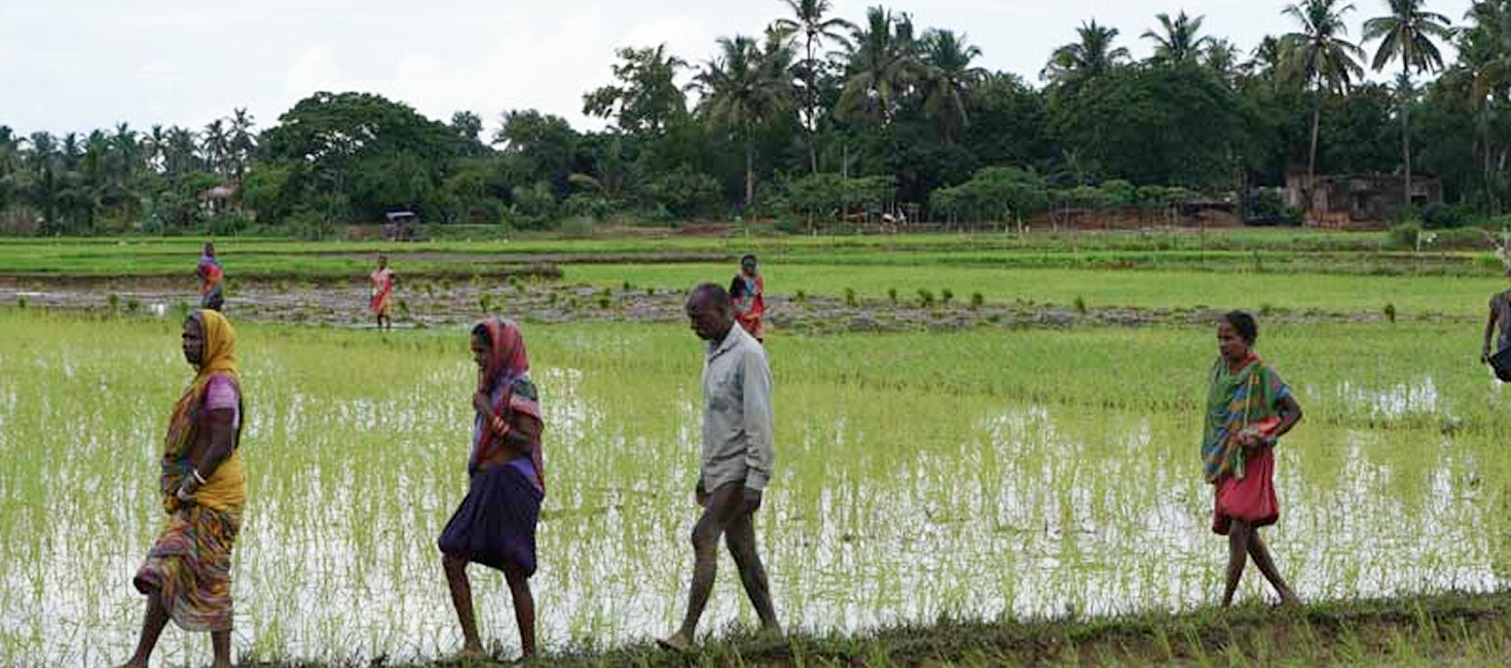
Johnson Topno, Executive Director, PHIA Foundation, shared firsthand how erratic rainfall and drought-prone conditions in Jharkhand have disrupted agricultural cycles, leading to seasonal migration, food insecurity, and increased pressure on women left behind. He highlighted how climate vulnerability is disproportionately impacting Adivasi communities and called for meaningful Gram Sabha empowerment.
“We cannot talk about climate action only from Delhi—Gram Sabhas must be activated to manage their own resources and resilience.”
2. Street Vendors Face the Brunt Without Being the Cause
Sandeep Verma, Convenor at the National Hawkers Federation, highlighted how India’s street vendors and urban informal workers contribute negligible carbon emissions yet face worse working conditions under extreme heat, poor sanitation, and complete exclusion from heat action plans. He cited findings from the Heat Havoc report:
- 80% of street vendors report customer loss during heatwaves
- Only 9.5% have heard of city heat action plans
- Nearly 83% lack any guidance to cope with heat-related stress
He called for early warning systems, protective infrastructure, and a new paradigm of “Vendor Social Responsibility” (VSR). Just as CSR obliges companies to contribute to social development, VSSR proposes that urban authorities and businesses take responsibility for the sustainability and well-being of street vendors, recognising them as critical contributors to the city economy.
“Street vendors are constantly treated as encroachers. Their exclusion from city planning makes them invisible to relief, safety nets, and heat action plans”.
3. Women Are Not Just Victims, They Are the Solution
Dr. Ayesha Chaudhary, India Director, WomenLift Health underlined that women are invisible in climate-health policies, data, and leadership, despite being the most affected. She advocated for gender-transformative frameworks and shared an inspiring example of a woman innovator from Maharashtra developing a menstrual cup applicator to enable safer menstrual hygiene under constrained conditions, highlighting the need for community-led innovation. “What we need is good intentional community leadership. That’s where the solution lies”, she emphasized.
“We must stop seeing frontline women workers as only resources. They are leaders with lived experience and solutions.”
4. Youth and Adolescent Health: Agency, Not Dependents
Peter Borges of Human Touch Foundation spoke of the invisibilised struggles of adolescent migrants in Goa, especially around access to sexual and reproductive health. He stressed the need for redefining vulnerability and investing in safe spaces, mental health support, and youth-led advocacy. He also drew attention to how migrants, adolescents, and people affected by HIV are left out of public health responses to climate and disasters.
“Youth aren’t just stakeholders of the future, they are agents of change now. We must create platforms for their voices in policymaking.”
5. The Role of Data and Technology in Localising Responses
Pranav Savanur, Global Partnerships and Strategy Lead, Khushi Baby discussed how digital platforms, co-designed with ASHA workers, can generate hyperlocal vulnerability maps. These can inform district-level climate-health action plans and enable adaptive responses grounded in real-time community needs. “Digital tools must work for the last user, not just the last mile,” he said.
“The problem isn’t lack of data, it’s that we don’t use the right data in the right places. Vulnerability needs to be made visible, hyperlocally.”
6. Systems Thinking and Cross-Sector Action Needed
Satya Prakash, Chief Executive Officer of FXB India Suraksha, stressed the invisible link between climate stress in rural areas and distress migration to cities. He called for a care economy, inter-state coordination, and the need to integrate climate resilience into education, livelihoods, and protection systems, not as a silo, but as a thread across all development work. He illustrated how reduced crop yield in Meghalaya led to income loss, early marriage, and educational dropouts.
“Communities may not articulate climate change in technical terms, but their experiences tell us everything we need to know. We must decode and act.”
Closing Reflections and Calls to Action
The panel closed with an urgent call for humility, collaboration, and speed:
- Empower Gram Sabhas and traditional leaders to co-lead climate-health governance.
- Design gender-responsive systems that invest in women’s leadership at community and policy levels.
- Recognise informal workers in urban climate resilience planning.
- Integrate youth voices into health and climate policy processes.
- Leverage local data systems to target vulnerable pockets more effectively.
- Shift from tokenism to transformation, stop event-based campaigns and build long-term, community-led impact.
“This is not about egos. If you’re working in this space, wherever you are, join hands. We don’t have time.”
— Satya Prakash,
This panel brought powerful insights from the ground, rooted in lived realities and backed by data. It highlighted that adaptation must begin by listening to those most affected and acting through systems they trust. With climate change already reshaping lives across India, especially among the most marginalised, the need for equity-driven, community-powered responses has never been more urgent.